The Potential of Block Chain Technology in Philippine Education
By Dr. Amos Kibet, DIT
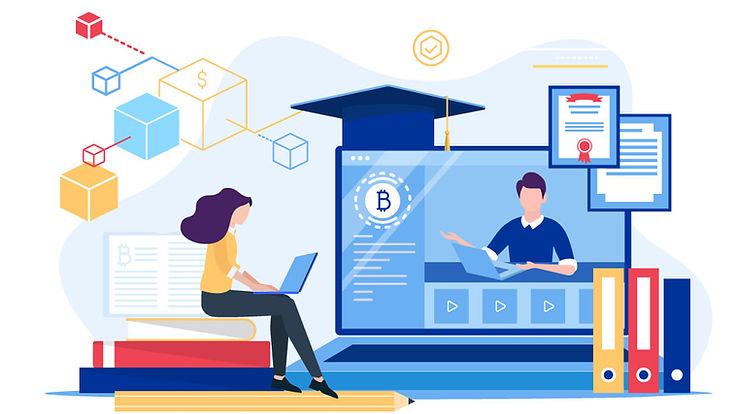
What is Blockchain Blockchain is a technology platform that enables digital verifications, such as for crypto currency. Innovative blockchain approaches are gaining traction in a growing number of fields. Blockchain technology is also used to improve Education. Blockchain technology is now widely used in a variety of areas, as proven by multiple studies and scientific studies. Blockchain-based applications are disruptive in their fields because of the infinite applications such as electronic cash. Recent areas of application of blockchain often researched in a scientific setting are numerous: distributed electricity industry; healthcare industry; International trade, privacy preservation; vehicular communication; network knowledge transformation; intellectual rights protection; secure wideband spectrum sensing and security enhancements; real estate transactions; pharmaceutical industry; and Agriculture. The article seeks to describe the current state of blockchain technology in education and examine the advantages of Blockchain technology.
Application in Education Education has the potential to be revolutionized by blockchain technology. The most significant benefit of blockchain in education is the ability to store educational certificates in digital form in a safe and secure manner. In the traditional education system, all the education qualification certificates including school certificates, higher education certificates and other skills certificates are kept on the paper. Having all of these documents on paper poses many challenges.

Consider the possibility that the file containing all of these certificates is lost. In such a situation, the first risk you may face is the unlawful use of your records/documents, and the second most difficult challenge will be running from one department to another to obtain another duplicate of your documents. Wouldn’t it be fantastic if you could safely and securely keep your documents online in a distributed manner?
The education sector may be able to benefit from blockchain technology. The cost of paper and printing will be reduced by storing documents on the blockchain. These documents will never be lost once they are saved on the blockchain, and it will be difficult to edit or falsify these documents.
Obtaining a suitable education is required in order to gain employment. For each position that they put on the market, each employer has its own set of qualifications. As a job candidate, you must demonstrate your qualifications by displaying your credentials and certificates. And these days, education credential fraud and forgery to match one’s qualifications are on the rise.
Since the data saved on the Blockchain is immutable and easily verifiable, these examples of fraud and forgery may be easily eliminated with the use of Blockchain technology. Furthermore, the distributed ledger’s education qualifications can be easily shared with employers. Employers can readily verify a candidate’s educational qualifications before hiring them or even considering him for an interview.
Blockchain technology has the potential to transform the whole educational system. Students today are educated not only in official face-to-face settings such as schools and university lecture rooms but also in informal situations. To improve one’s talents, there are several online courses, workshops, conferences, boot camps, and other options. On the blockchain network, all of this online learning data can be safely stored. The most significant advantage of using Blockchain in such an informal situation is the ease with which learned skills can be easily accredited and then shown to the employer or relevant organization to reap the benefits.
Stay in the loop